DJI vs Autel: Comparison of Quadcopters for Military Missions
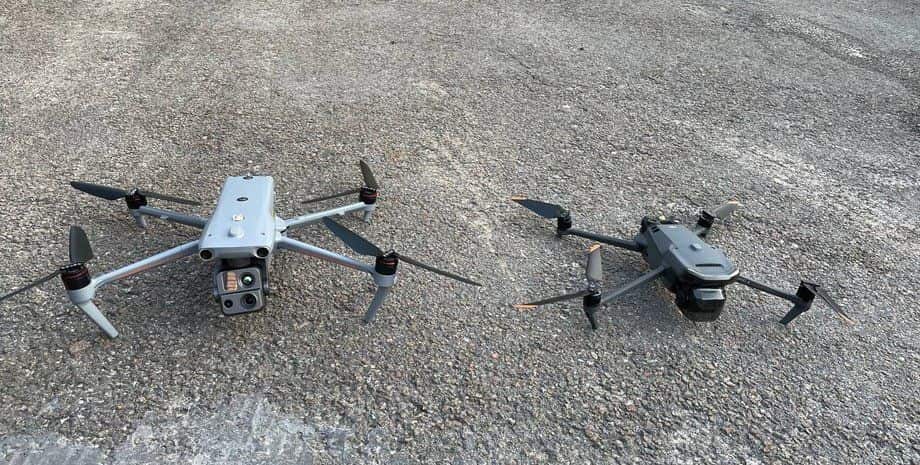
Ukrainian forces actively use DJI and Autel drones for reconnaissance, coordination, and strike recording. The widespread use of such equipment is easy to explain: quadcopters are simple to operate and effective on the battlefield. Different models are deployed at the front line, each with its own advantages and disadvantages. Global Mark compared several popular quadcopters to determine when DJI quadcopters are the better choice and when Autel UAVs are more suitable.
Comparison in Combat Conditions
Military units select drones for specific missions, focusing on different characteristics. Depending on whether the task is covert reconnaissance, long-range fire adjustment, infantry support, or dropping munitions, the appropriate model is chosen. Let’s compare DJI vs Autel — military drones evaluated by the following parameters:
- Image quality. Both brands equip drones with high-resolution cameras capable of target identification. Some models feature thermal imagers, powerful zoom, or AI-based algorithms to detect threats at distance, focus on objects, and enlarge images without losing clarity.
- Stealth. In this aspect, Autel quadcopters currently have the advantage. They offer strong protection against interference, frequency switching, and reliable performance under heavy electronic warfare, during night surveillance, and long-range target detection. New DJI quadcopters are less vulnerable than earlier models used in the first years of the full-scale conflict. With proper configuration, DJI drones cannot be tracked by adversaries, nor can operators be located or targeted.
- Additional functions. Both brands provide drones that autonomously plot flight paths, avoid obstacles, return to home, and maintain altitude. These features simplify operator tasks and improve mission efficiency, though they are not always essential depending on the mission.
- Cost. DJI has the advantage here, offering a wider range of models across different price categories.
For the best balance of price and imaging quality, DJI drones are often the optimal choice. Due to higher costs, Autel quadcopters are less common, but they are used in night operations and missions in areas with heavy electronic warfare.
Main Characteristics of DJI Quadcopters
Mavic and Matrice are DJI’s most popular military quadcopters. Each series includes multiple models after several upgrades. Broadly, they are divided into two categories: tactical reconnaissance and versatile drones for a wide range of missions.
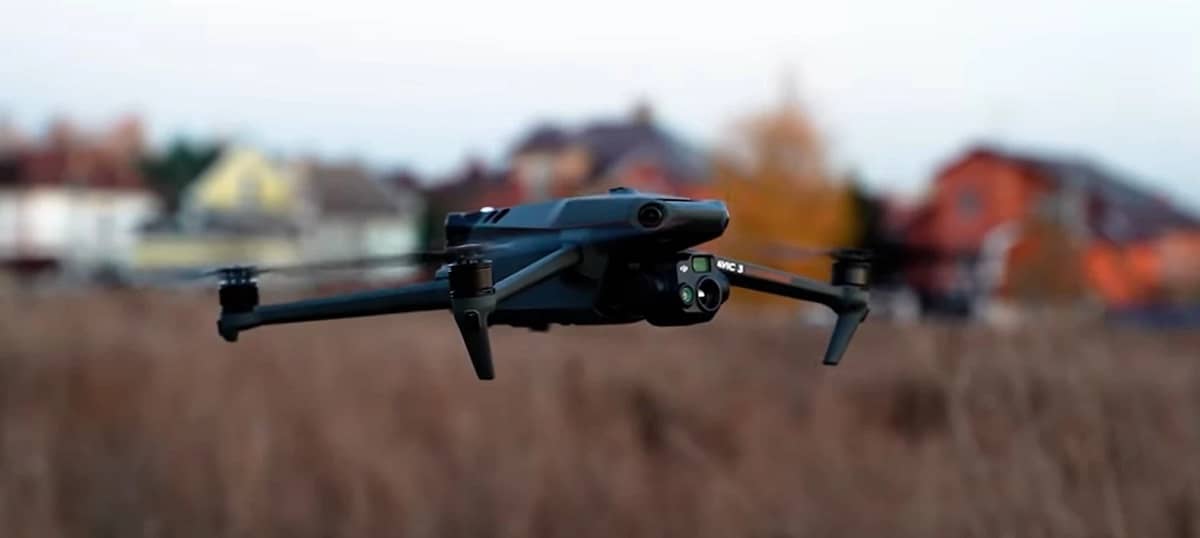
For short-range reconnaissance, artillery adjustment, and assault group support, DJI Mavic 3, Mavic 3 Pro, and Mavic 3T are commonly used. They are compact, fast, and maneuverable, making them easy to deploy.
For night reconnaissance or extended observation in difficult conditions, heavier quadcopters such as Matrice 30T and Matrice 4T are used. To determine which drone is better suited, let’s compare several popular models by key specifications:
DJI Drone |
Camera |
Thermal Imager |
Signal Transmission Range |
Flight Time |
Max Flight Speed |
Application |
Mavic 3 |
20 MP |
No |
8 km |
45 min |
75.6 km/h |
reconnaissance, dropping munitions |
Mavic 3 Pro |
Three cameras: main — 20 MP, medium telecamera — 48 MP, long-range zoom — 12 MP |
No |
15 km |
43 min |
68 km/h |
reconnaissance, fire adjustment, observation |
Mavic 3T |
Three-camera system with zoom and main 48 MP camera |
Yes |
15 km |
45 min |
75.6 km/h |
night reconnaissance |
Matrice 30T |
Multisensor system: main camera — 48 MP, telecamera with hybrid zoom up to 16x and digital up to 200x — 12 MP, laser rangefinder |
Yes |
15 km |
41 min |
82.8 km/h |
technical and combat missions in difficult conditions (smoke, fog, low light, etc.) |
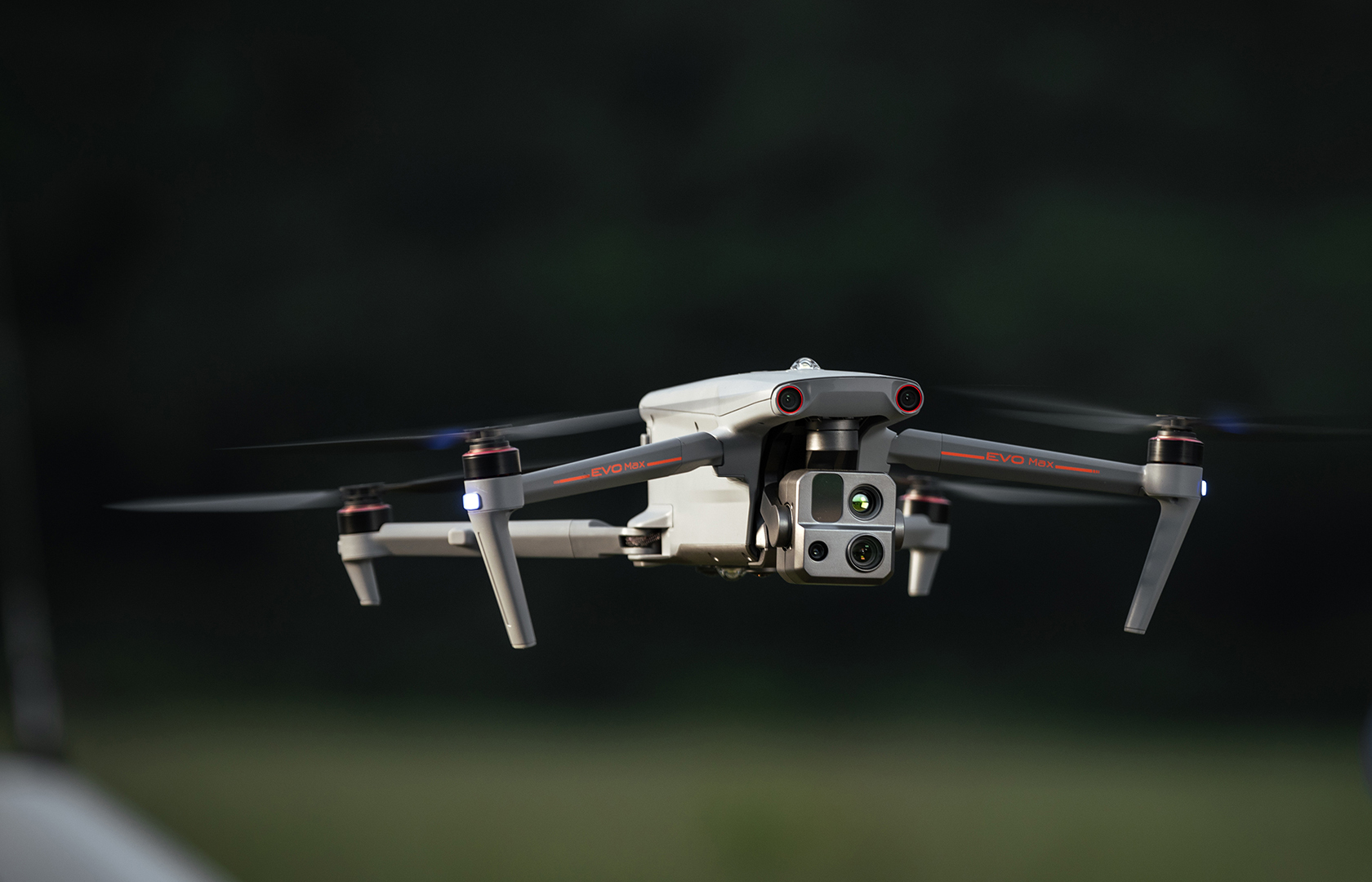
Autel quadcopters for military use often surpass DJI equivalents with stronger optics, resilience against enemy electronic warfare, and AI-based functions. They deliver detailed imagery even under challenging conditions. The main drawback is high cost. Let’s compare specifications of popular models: Autel Drone Camera Thermal Imager Signal Transmission Range Flight Time Max Flight Speed Application EVO II Dual Rugged Main camera — 50 MP (1/1.28" CMOS) Yes 15 km 38 min 72 km/h reconnaissance, detection of personnel in forests, target designation for other units EVO Max 4T Main camera — 48 MP, telecamera — 48 MP, optical zoom — 10x, digital — 160x, laser rangefinder up to 1200 m Yes, with 16x zoom 20 km 42–43 min 82.8 km/h artillery adjustment, operations in heavy electronic warfare zones EVO Max 4N Main wide-angle camera — 50 MP, night camera — 2.3 MP, laser rangefinder up to 1200 m Yes, with 16x zoom 20 km 42–43 min 82.8 km/h covert night reconnaissance, identification of enemy equipment and personnel, missions in poor visibility When choosing between DJI and Autel drones, the comparison should be based primarily on mission objectives and operating conditions. Often a compromise is required to select the optimal option for specific tasks, meaning no universal solution exists. As manufacturers continue to improve quadcopters, future models may offer even better performance.Capabilities and Features of Autel Drones