Thermal Camera Advantage over Night Vision in Combat Conditions
Manufacturers of unmanned aerial vehicles equip drones with different types of cameras. They vary in sensor resolution, optical zoom, sensitivity, and other features. To safely and effectively carry out combat missions, military forces use quadcopters with night vision cameras or thermal imagers. Their operating principles differ significantly, which is important to consider.
How Night Cameras Work in Drones
A night camera on a drone performs well in low-light conditions, but in complete darkness it cannot “see.” Thanks to high light sensitivity, it captures light from the moon, stars, or urban lighting, allowing silhouettes of people, buildings, and other objects to be distinguished on the screen. If there are no light sources, such as in dense forests or smoke-filled buildings, using such a drone is impractical.
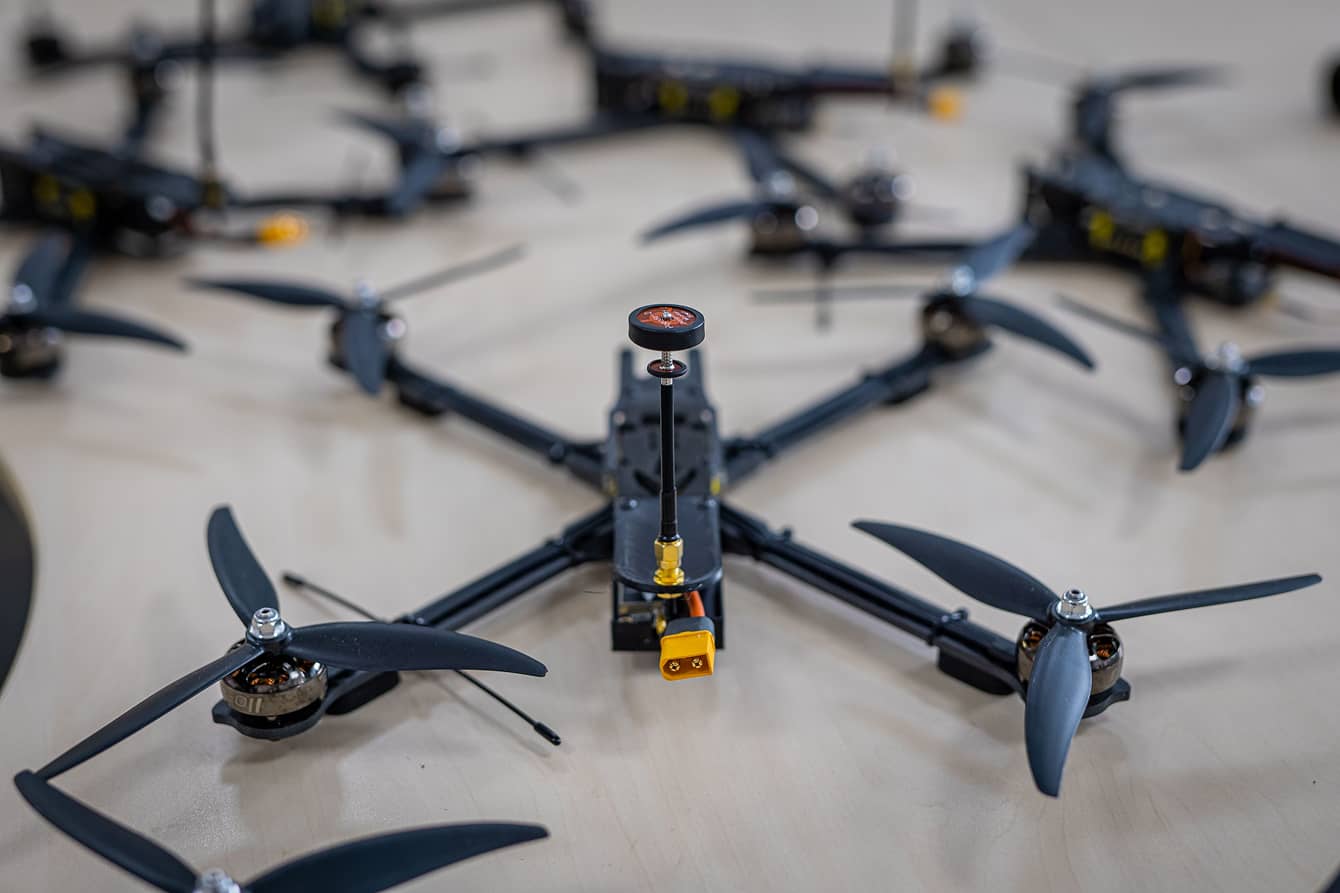
On the front line, quadcopters with night cameras are typically used for filming at dusk or in low-light conditions. Global Mark recommends choosing an FPV PHOTON drone with a 7", 10", or 13" frame for reconnaissance, observation, tactical missions at medium distances, and target engagement. Its advantage lies in the ability to integrate a thermal imaging module, significantly expanding the quadcopter’s functionality.
Principle of Thermal Imagers
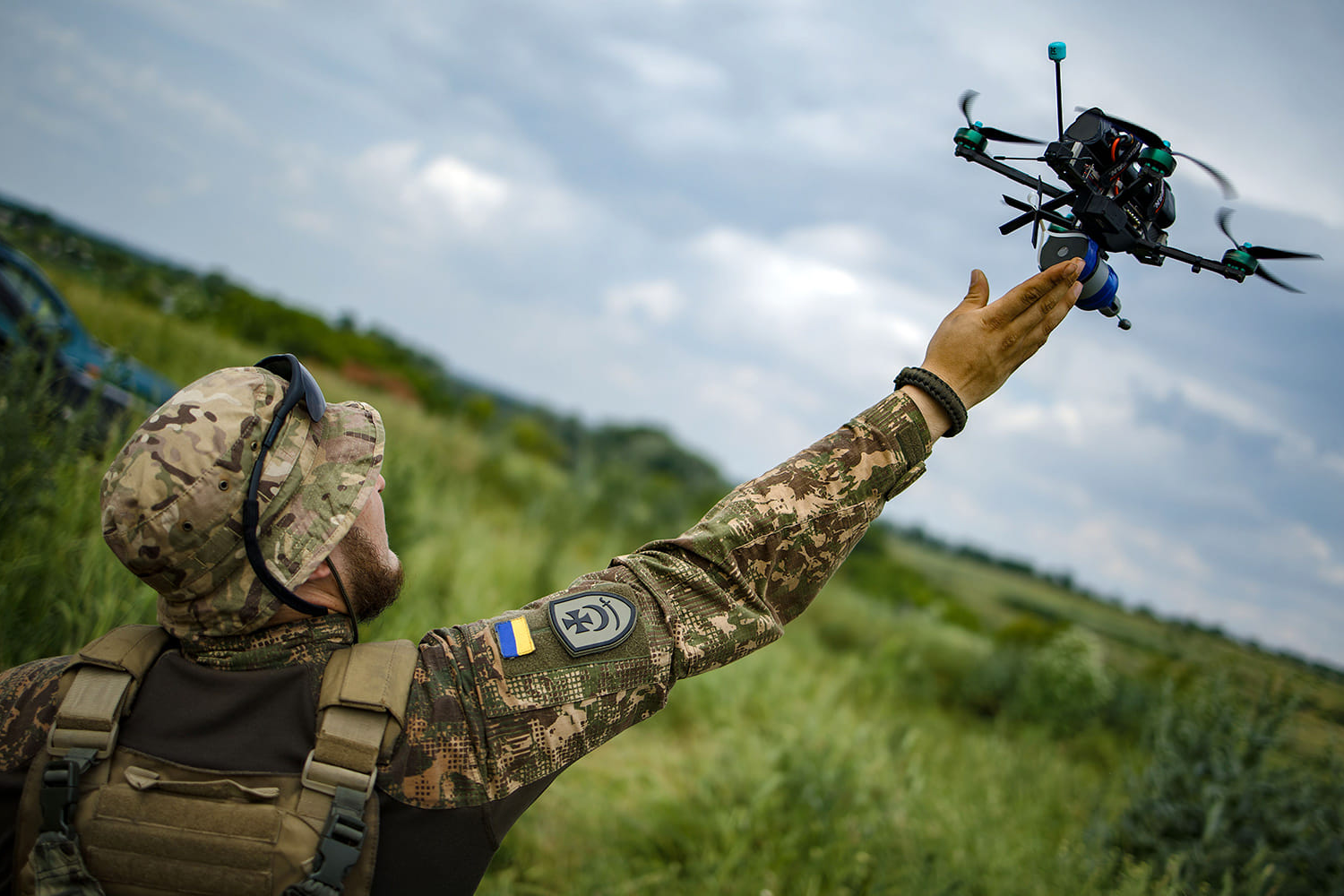
A thermal camera on a drone works differently: instead of reacting to light like a night camera, it detects heat radiation from objects. On the screen, all objects with a temperature higher than the surrounding environment are displayed. Even if a person or vehicle temporarily disappears from view, they can be detected by their heat signature.
Military forces use quadcopters with thermal imagers to detect targets in darkness. They can “see” enemies who are camouflaged or behind cover. However, there are drawbacks: it is harder to navigate terrain and identify targets, since shapes, markings, or small details of equipment cannot be clearly distinguished.
Both sides of the conflict use camouflage, which can reduce visibility of heat signatures. In hot weather, objects heat up under the sun and cool down slowly, making images appear as large warm patches where silhouettes of people or vehicles are difficult to distinguish.
Comparison of Capabilities in Combat Conditions
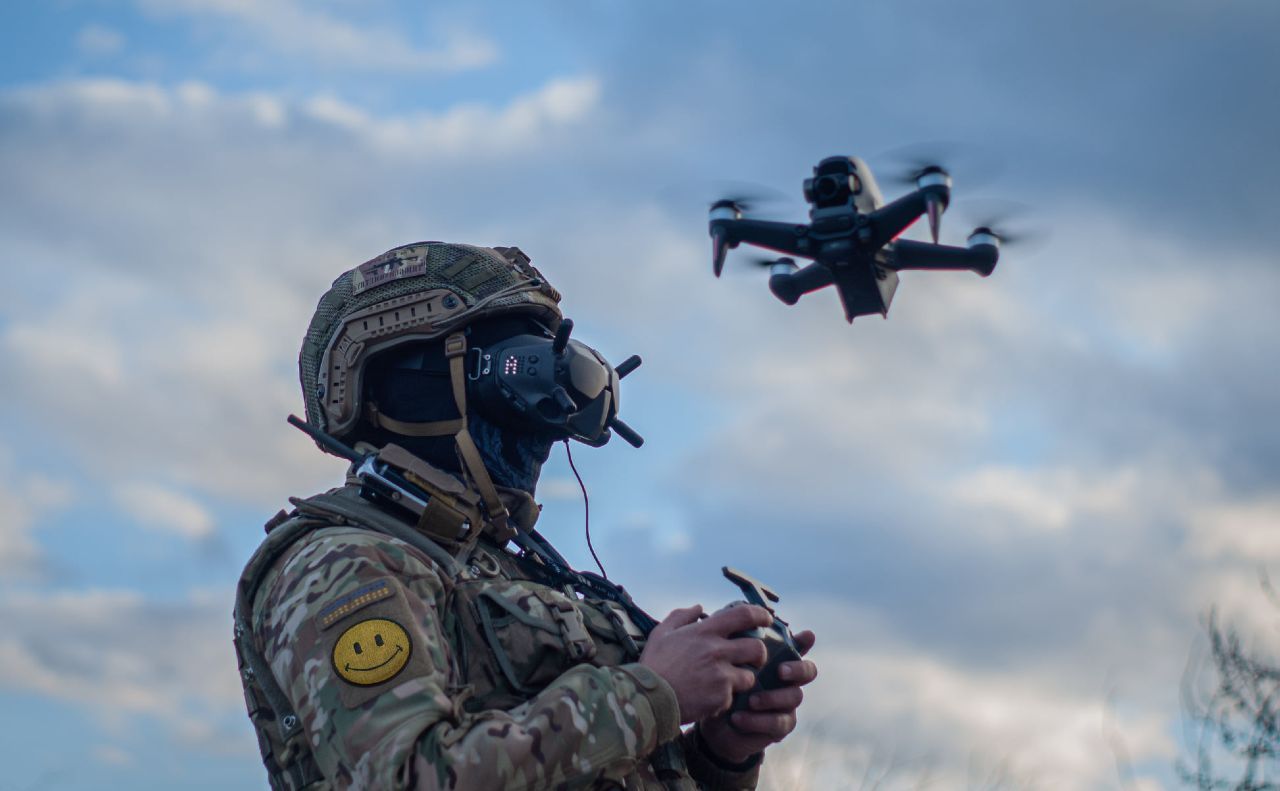
It is impossible to say definitively whether thermal imagers or night cameras are better, as they serve different purposes and adapt to different conditions. With thermal imagers, forces can detect enemy movement at distance, identify personnel and vehicles through vegetation, in smoke, and in complete darkness. Night cameras are used where detailed imagery is needed under low-light conditions.
Although thermal imagers detect heat sources, operators cannot recognize clothing markings or other fine details. If the enemy is inside a building, detection becomes more difficult. In such conditions, a night camera is more effective: even minimal moonlight allows silhouettes of people, vehicles, structures, trees, and terrain contours to be distinguished.
To maximize effectiveness, universal platforms are often used — drones equipped with both night and thermal cameras. For reconnaissance or tactical missions at night, in smoke, or fog, FPV PHOTON drones with Caddx IRC-384CA or Caddx IRC-640CA thermal cameras are recommended. Their configuration can be customized upon request to meet specific operational needs.
Which Night or Thermal Camera to Choose for a Drone
In military conditions, drones are used for various purposes — from reconnaissance to covert approaches and strikes on enemy targets. The choice of model depends on the mission and operating environment.
The camera, like other components on the frame, affects the drone’s overall weight, flight stability, and endurance. It is important to note that not every camera is compatible with every UAV. Manufacturers offer analog and digital models, differing in image quality, signal stability, and compatibility with video transmitters. This limits the choice of optics for quadcopters.
For night cameras, Global Mark recommends the Caddx Ratel 2 Night Version 1500 TVL — one of the best models as of 2026. It offers high resolution (1500 TVL), high light sensitivity (0.0001 LUX), and a wide dynamic range with Super WDR (HDR).
If a drone with a thermal imager is required, the camera quality should match the mission. For strike drones, lower resolution models — 256 or 384, such as the Caddx IRC-384CA — are suitable. For artillery adjustment, enemy observation, and missions in complete darkness, more powerful cameras like the Caddx IRC-640CA are recommended.