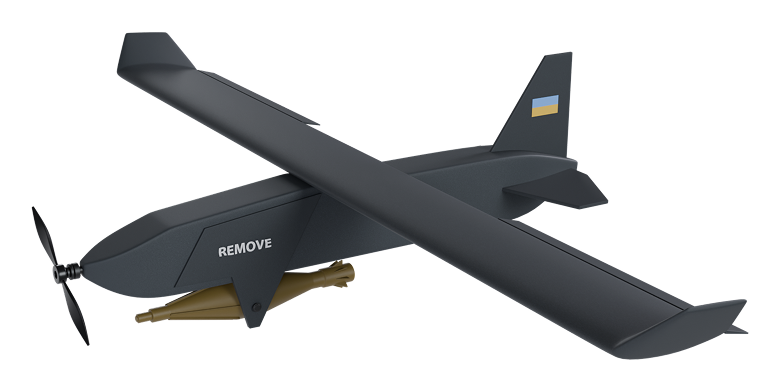
SWARM SYSTEM Autonomous Multi-Domain Swarm Coordination is an advanced command-and-control architecture designed to enable multiple unmanned platforms to operate as a unified, intelligent force. Through distributed autonomy and continuous peer-to-peer data exchange, each asset contributes to a resilient network capable of collective decision-making, adaptive mission execution, and coordinated action across complex operational environments.
Operational Concept
- Distributed and decentralized command architecture;
- Real-time collaborative information sharing;
- Adaptive behavior driven by mission objectives and battlefield conditions;
- Coordinated execution of tasks across the swarm.
Operational Benefits
- High survivability through the elimination of single points of failure;
- Scalable deployment ranging from small teams to large autonomous formations;
- Increased operational effectiveness and mission success rates;
- Reduced signature and enhanced persistence through distributed maneuvering;
- Rapid response and adaptation to dynamic operational environments.
Technology Framework
- Artificial intelligence-driven decision support and autonomy;
- Secure, resilient, and low-latency mesh communications;
- Autonomous navigation, positioning, and route planning;
- Multi-sensor fusion and real-time situational awareness;
- Collaborative mission management and target assignment.
Core Capabilities
- Autonomous coordination of heterogeneous unmanned systems;
- Dynamic route generation and mission optimization;
- Distributed target detection, prioritization, and allocation;
- Collaborative obstacle avoidance and adaptive pathfinding;
- Self-healing network architecture ensuring mission continuity despite platform attrition;
- Real-time re-tasking and autonomous mission reconfiguration.
Applications
- Maritime and coastal operations;
- Intelligence, Surveillance, and Reconnaissance (ISR);
- Coordinated strike and precision engagement missions;
- Persistent area monitoring and wide-area coverage;
- Critical infrastructure security and force protection;
- Multi-domain autonomous operations.
CONTACT US
Do you still have questions?
Fill out the form and we will contact you as soon as possible