How the EW System “Nebokray” Works in Suppressing Enemy Signals
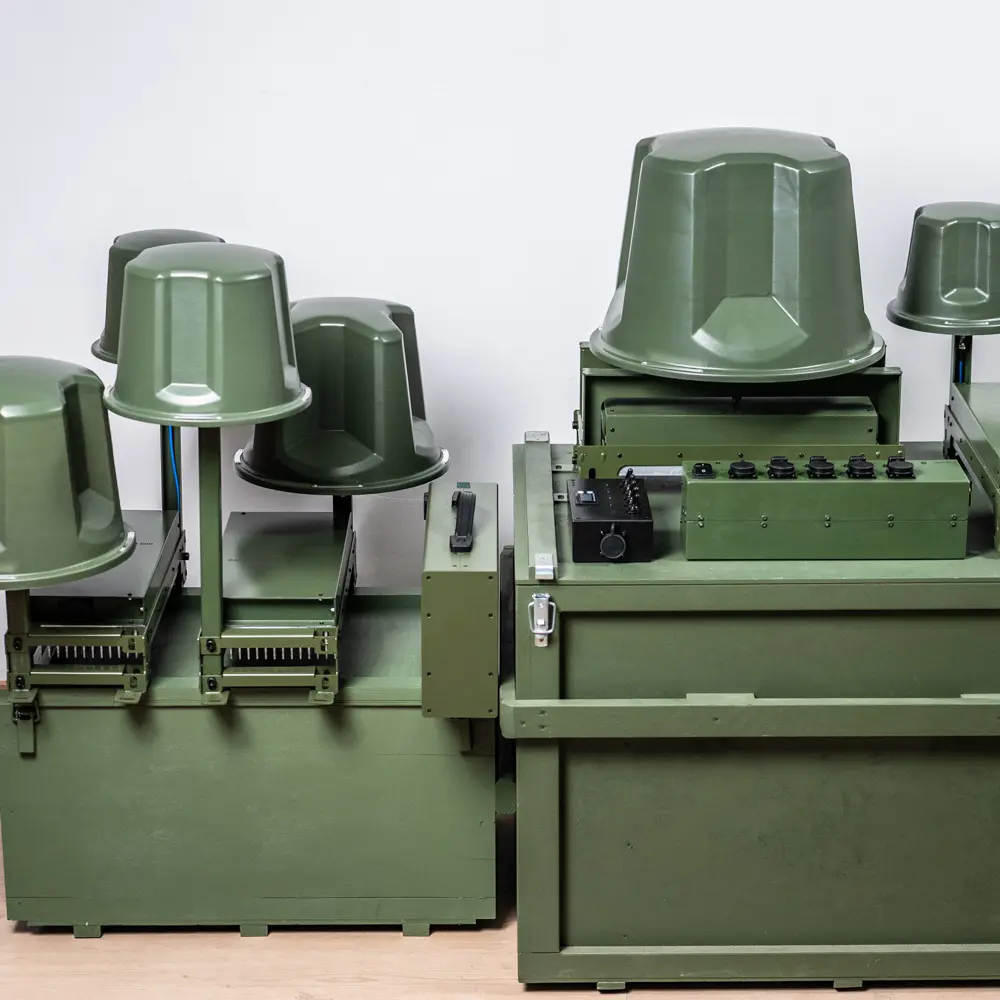
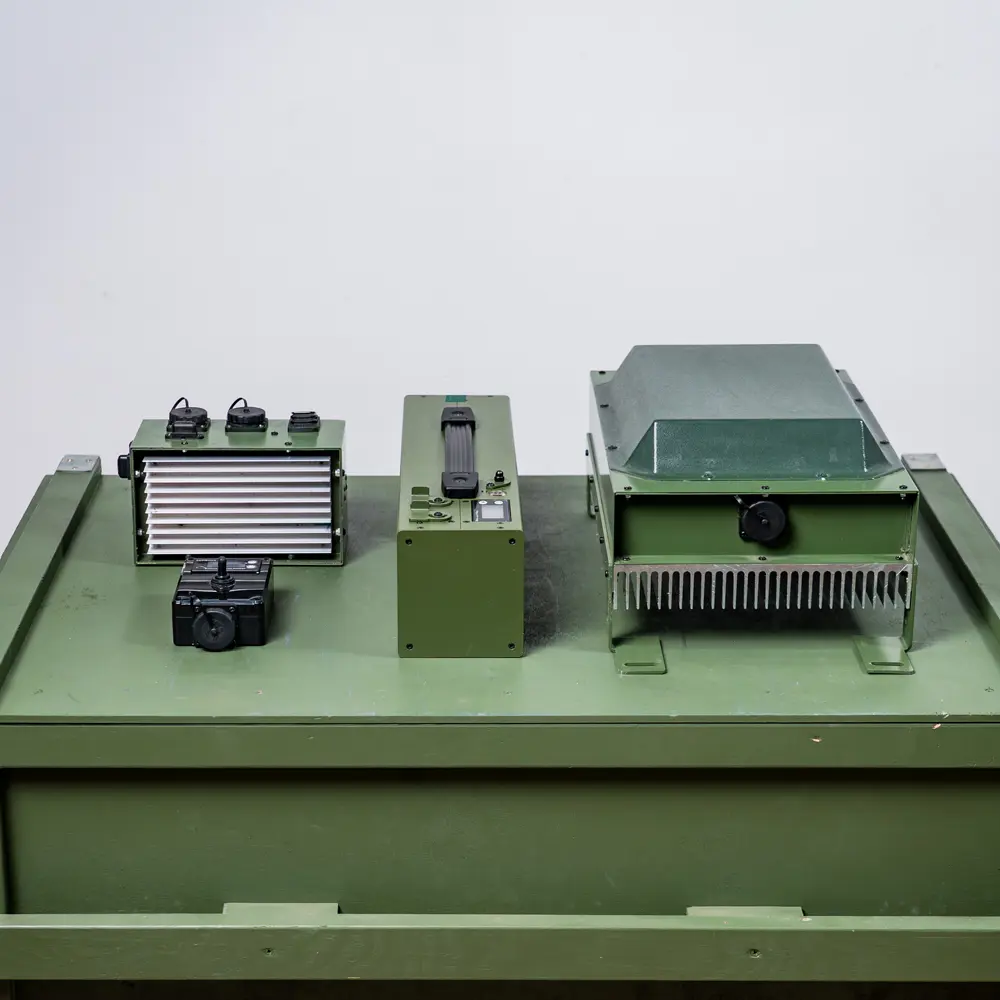
The EW system “Nebokray” is a modern electronic warfare complex created by the developers of Global Mark. Such complexes are designed to ensure the safety of personnel and military equipment from various types of UAVs: FPV drones and reconnaissance quadcopters.
Principle of operation of the “Nebokray” system
Thus, EW systems “Nebokray,” created by Global Mark, are intended to neutralize attacks by jamming the signals of FPV drones and other types of quadcopters. These systems generate radio interference at the frequencies used by drones for control and video transmission. This leads to signal loss, as a result of which the enemy drone loses control or returns to the point from which it was launched.
Main capabilities for signal suppression
The EW system “Nebokray” is a modern complex designed to protect AFU personnel and military equipment from FPV drone attacks and other UAVs. This device is distinguished by the following capabilities:
- Multi-band action. This jammer is designed to block the most critical frequencies on which modern quadcopters operate. The system suppresses control channels, video communication, and GPS.
- Frequency spectrum. EW complexes for the front “Nebokray” usually cover the standard ranges used by civilian and military FPV drones.
- Operating modes. This complex provides the ability to create an invisible shield of 360 degrees around the object. In addition, the system can perform concentrated action in one direction to engage targets at long distances.
Specific frequency configurations of the device may be changed by the manufacturer according to new firmware or non-standard frequencies used by enemy forces.

Use of “Nebokray” for protection against FPV drones
“Nebokray” is an EW system against UAVs that works by jamming control and video transmission channels. For combating enemy UAVs, the following capabilities are implemented:
- Multi-channel capability. The system can operate simultaneously on several frequencies, which is effective against FPV drones that often change operating ranges.
- Principle of action. The systems generate electromagnetic interference to break the connection between the operator and the UAV.
- Autonomy. The operating time of the complexes from built-in batteries exceeds 3 hours, allowing their use in mobile conditions.
- Suppression spectrum. EW operates in standard ranges and covers typical civilian frequencies.
In addition, “Nebokray” is also used as EW for position protection. This is manifested in the following:
- Protection of equipment. Systems can be installed on cars, tanks, or APCs, creating a protective dome during movement.
- Trench EW. Use of stationary or portable modules to cover infantry positions from strikes by combat UAVs.
- Object protection. Systems are deployed around the perimeter of important objects to prevent dropping of munitions and enemy reconnaissance missions.
However, such devices are powerless against tethered drones, since they lack radio communication.
Practical examples of use in combat conditions
EW systems “Nebokray” are actively used by Ukrainian AFU units to counter enemy UAV crews. There are several practical directions for the use of this electronic warfare system:
- Protection of strongpoints and bunkers. The military uses the system to protect personnel from FPV drone attacks and quadcopter drops.
- Ensuring logistics. Complexes are installed on vehicles to protect convoys and evacuation transport, creating a mobile protective barrier and preventing targeted UAV strikes on moving objects.
- Combating multi-level threats. This EW system can simultaneously block a wide range of communication channels, which is effective when the enemy changes the operating frequencies of its UAVs.
If a UAV enters the zone of action of the “Nebokray” EW, the enemy drone may behave differently: hover, descend without maintaining course, return to the launch point, or fall due to loss of navigation.
Prospects for the development of Ukrainian EW systems
The Ukrainian electronic warfare industry has significantly expanded during the full-scale invasion. This is manifested in the following directions:
- Intellectualization and AI. Modern EW means are moving towards the use of artificial intelligence for automatic detection and recognition of enemy UAV frequencies, enabling adaptation of interference without operator intervention.
- Integrated solutions. Demand is growing for complexes that combine electronic reconnaissance and electronic warfare capabilities.
- Countering more resilient UAVs. Ukrainian developers are actively working on creating systems to combat fiber-optic drones or UAVs with machine vision that ignore conventional interference.
Currently, about 90% of EW systems used at the front are of Ukrainian production.