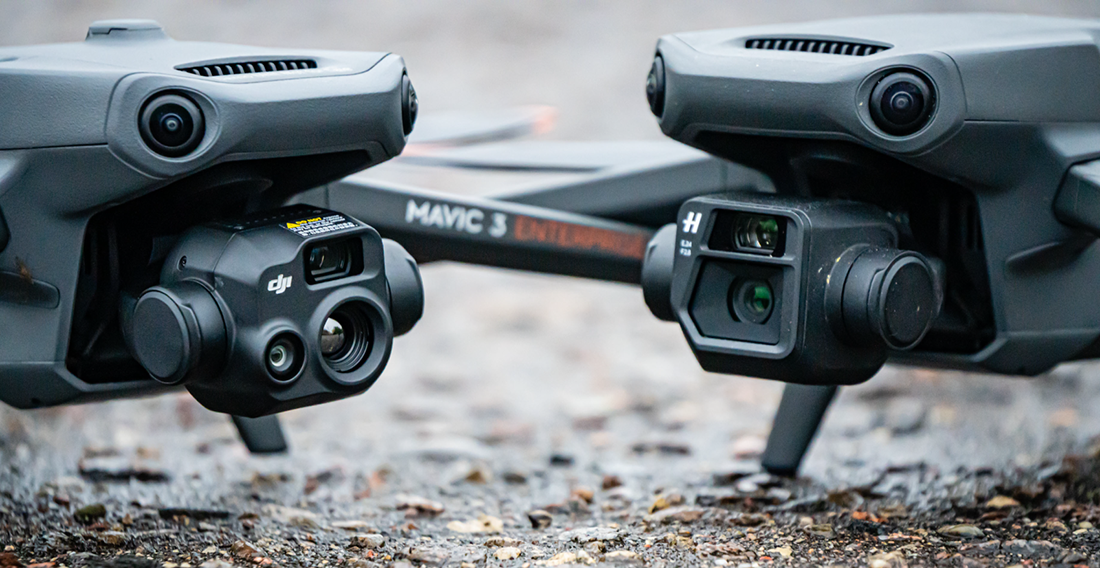
Thermal imagers for drones are high-tech devices installed on UAVs that allow the formation of images based on the infrared radiation of objects, i.e., their heat signature. Thermal cameras on drones are critically important for UAVs because they operate under any lighting conditions. This significantly expands capabilities during combat operations, as well as in search-and-rescue missions for detecting and evacuating the wounded.
Principle of Operation of Thermal Sensors
Drones for night operations are equipped with a thermal sensor that registers infrared radiation emitted by all objects with a temperature above zero. The thermal sensor works according to the following principle:
- Radiation collection. The thermal imager’s lens captures heat radiation from objects and directs it to the sensor.
- Signal conversion. A special matrix of many detectors records the IR radiation. Under its influence, each detector heats up, causing a change in electrical resistance.
- Processing and visualization. The received electrical signals are analyzed by the built-in processor, which compares the intensity of radiation at different points and converts this data into a digital image.
After this, a thermogram is displayed – a visual representation of the thermal field of the object, where color shades show relative temperatures, even in complete darkness.
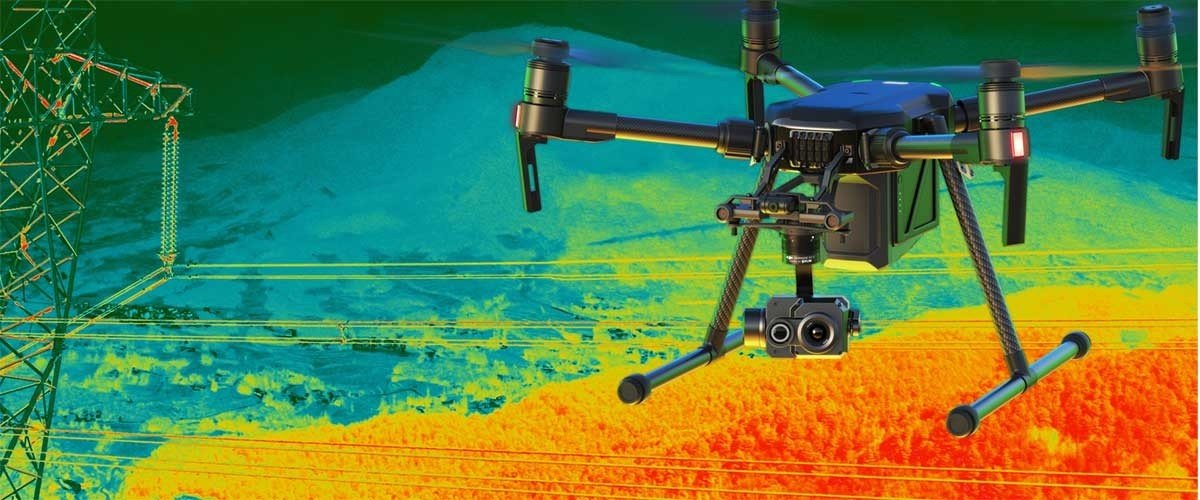
Target Detection in Darkness and Difficult Conditions
Night drones and other UAVs are equipped with thermal imagers to ensure the detection of priority enemy targets in darkness or under poor visibility conditions during the day. Such equipment on drones has several important advantages:
- Detection in darkness. Thermal imagers work regardless of lighting levels, allowing quick identification of required objects.
- Detection through obstacles. The technology makes it possible to see through smoke, fog, dust, or foliage – things inaccessible to conventional cameras.
- High efficiency. Drones with thermal imagers can survey large areas, making them indispensable for searching for people and objects in difficult conditions.
- Extended capabilities. Thermal imagers not only detect objects but also assess their condition, increasing the effectiveness and advantages of operations.
Thus, drones with thermal imagers are actively used for reconnaissance and targeting during combat operations, and can also be employed by rescue services and in industrial monitoring.

Advantages for Reconnaissance and Targeting
Drones for night operations are necessarily equipped with thermal sensors. Such devices have several advantages for conducting reconnaissance night missions:
- Independence from lighting. UAVs operate in complete darkness, providing round-the-clock observation.
- Operation in any weather. Ability to detect objects through fog, smoke, and other obstacles without loss of efficiency.
- Detection of hidden targets. Drones with thermal imagers help locate camouflaged equipment and other objects for subsequent engagement.
- Long detection range. Modern models can identify priority targets at distances of several kilometers.
In addition, drones with thermal imagers can conduct covert surveillance, enabling operations from low-visibility positions. For targeting, such UAVs also have advantages: increased strike accuracy, determination of target priority, and the ability to operate under any conditions.
Limitations and Factors Affecting Image Quality
The quality of the obtained image depends on several technical and external factors. The main ones include:
- Matrix resolution. Higher resolution provides more detailed and informative images.
- Lens diameter. A larger lens allows more radiation to pass through, making the image brighter and more contrasted.
- Screen resolution. High-quality displays ensure clear visualization and good detail.
- Refresh rate. Influences the smoothness of the image during drone or target movement.
Additionally, the operation of drones with thermal imagers may be limited by atmospheric conditions, environmental features, or dense materials through which infrared radiation passes poorly.
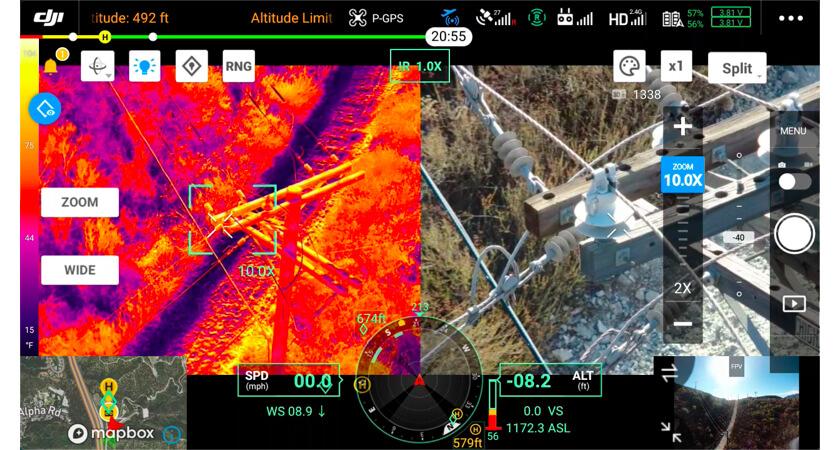
Practical Tips for Use During Military Operations
The use of drones with thermal imagers provides significant advantages during combat. However, there are several important recommendations that help effectively accomplish assigned tasks:
- Adaptation to darkness. It is necessary to get used to working in complete darkness and possible distortions in distance perception.
- Lens cleanliness. Optical elements must be regularly cleaned of dust, dirt, and moisture to avoid degrading image quality.
- Power source control. Always check battery charge levels and carry spare batteries.
In addition, it is important to conduct training in different conditions to gain additional practical skills and increase the effectiveness of drone use.