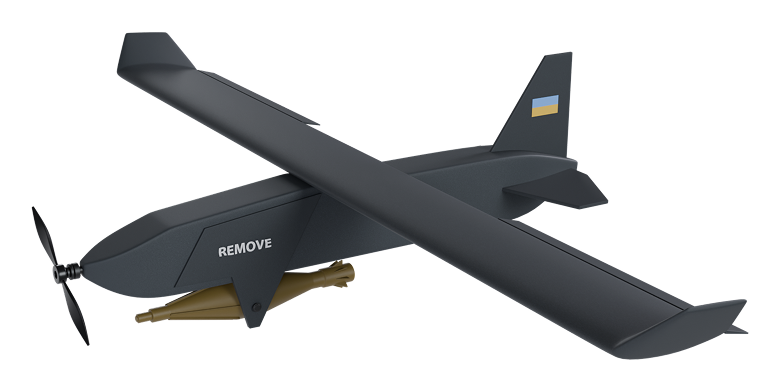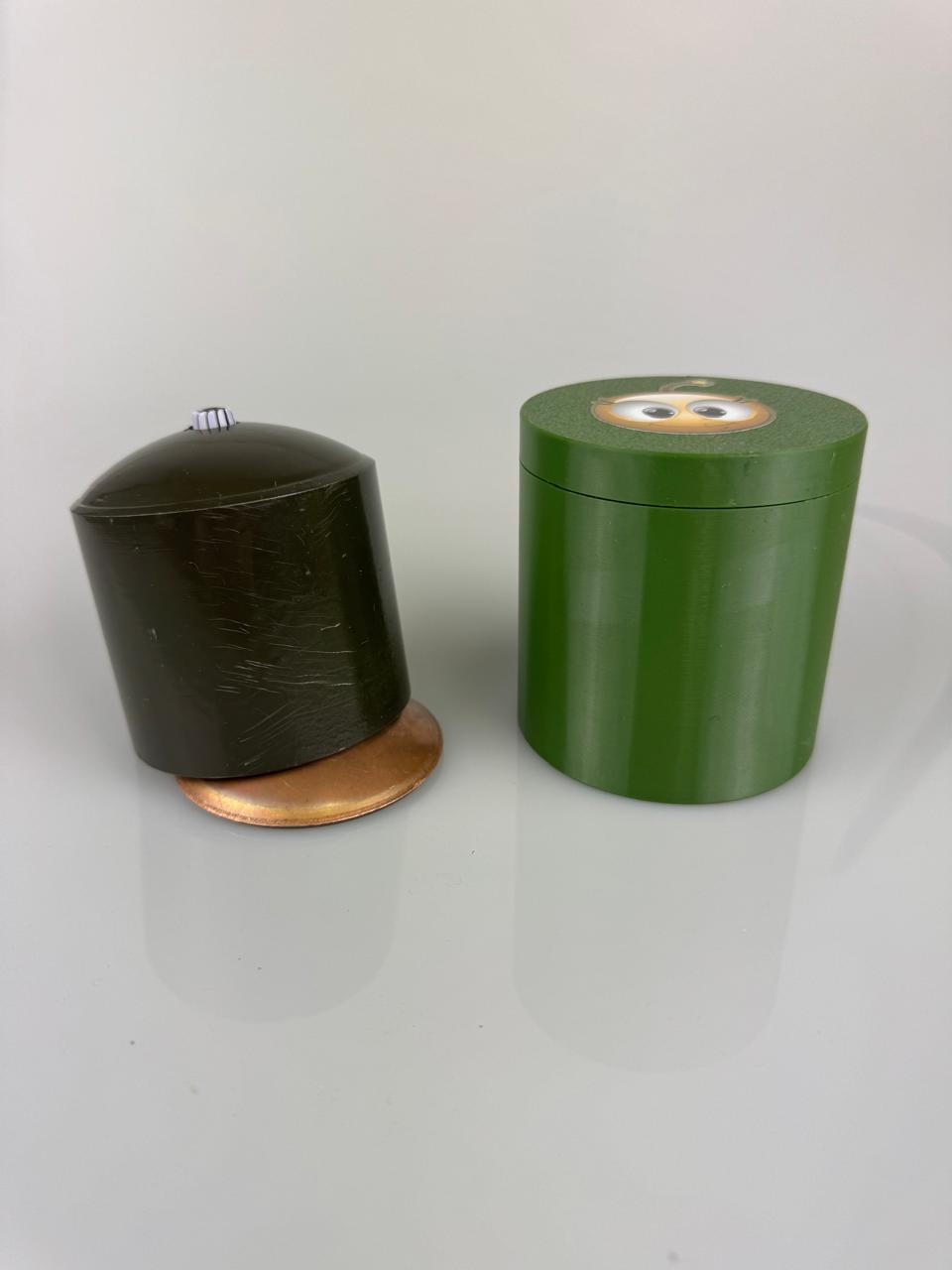
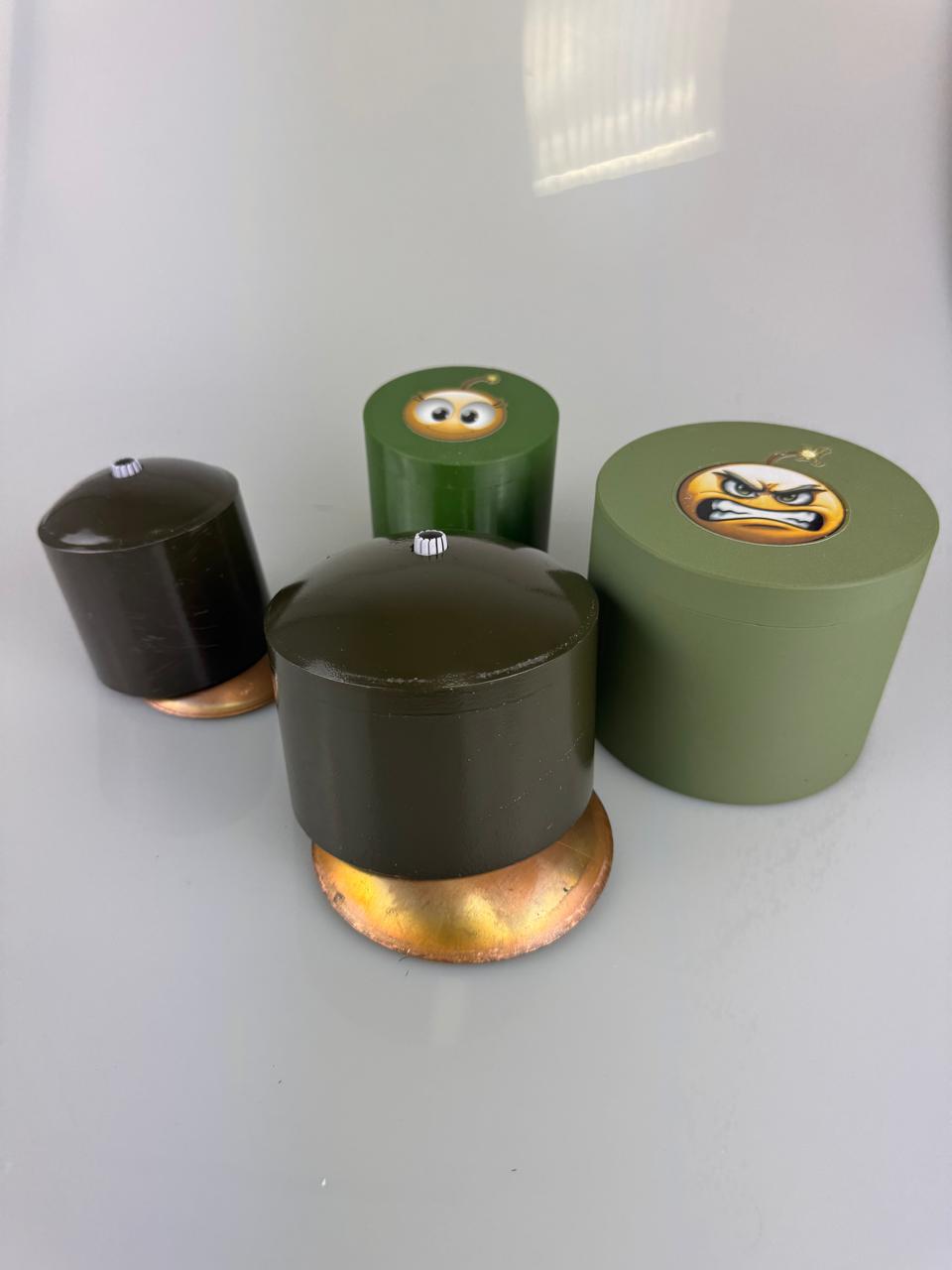
ZKO-100 “Grumpy” ammunition
Designed for use with UAVs with a payload capacity of 2 kg or more and intended to engage armored fighting vehicles, tanks, self-propelled artillery systems, and other armored enemy assets.
The warhead is an explosively formed penetrator (EFP), providing strong armor-piercing capability and a long stand-off engagement range (from 1.5 to 20 m). It is used against lightly armored vehicles (SPGs, IFVs, APCs) protected by anti-shaped-charge and counter-drone protection systems.
An explosively formed penetrator is the destructive element of a shaped-charge munition, formed during the detonation of a specially designed explosive charge and intended to penetrate armor or other solid barriers.
Operating Principle
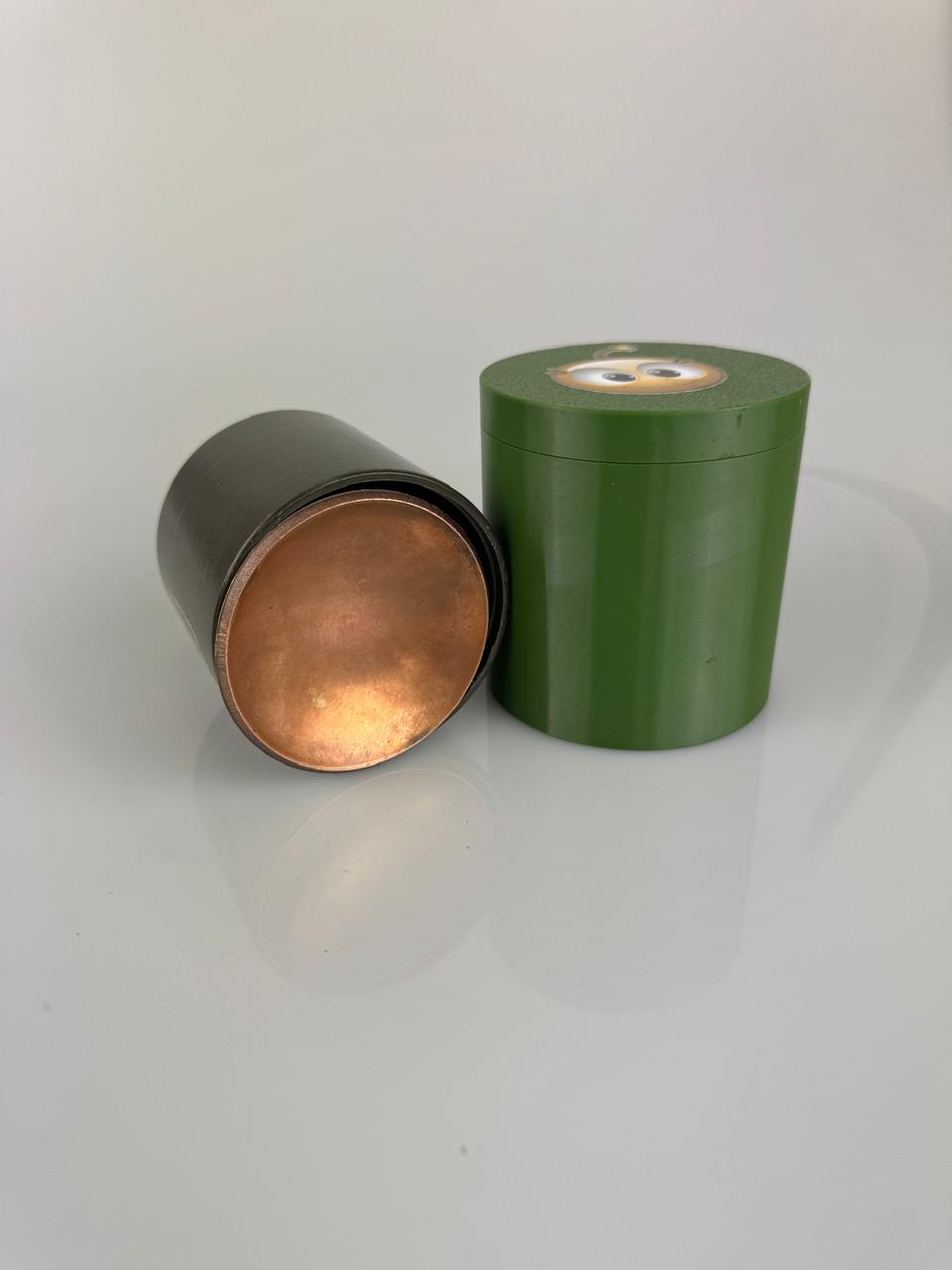
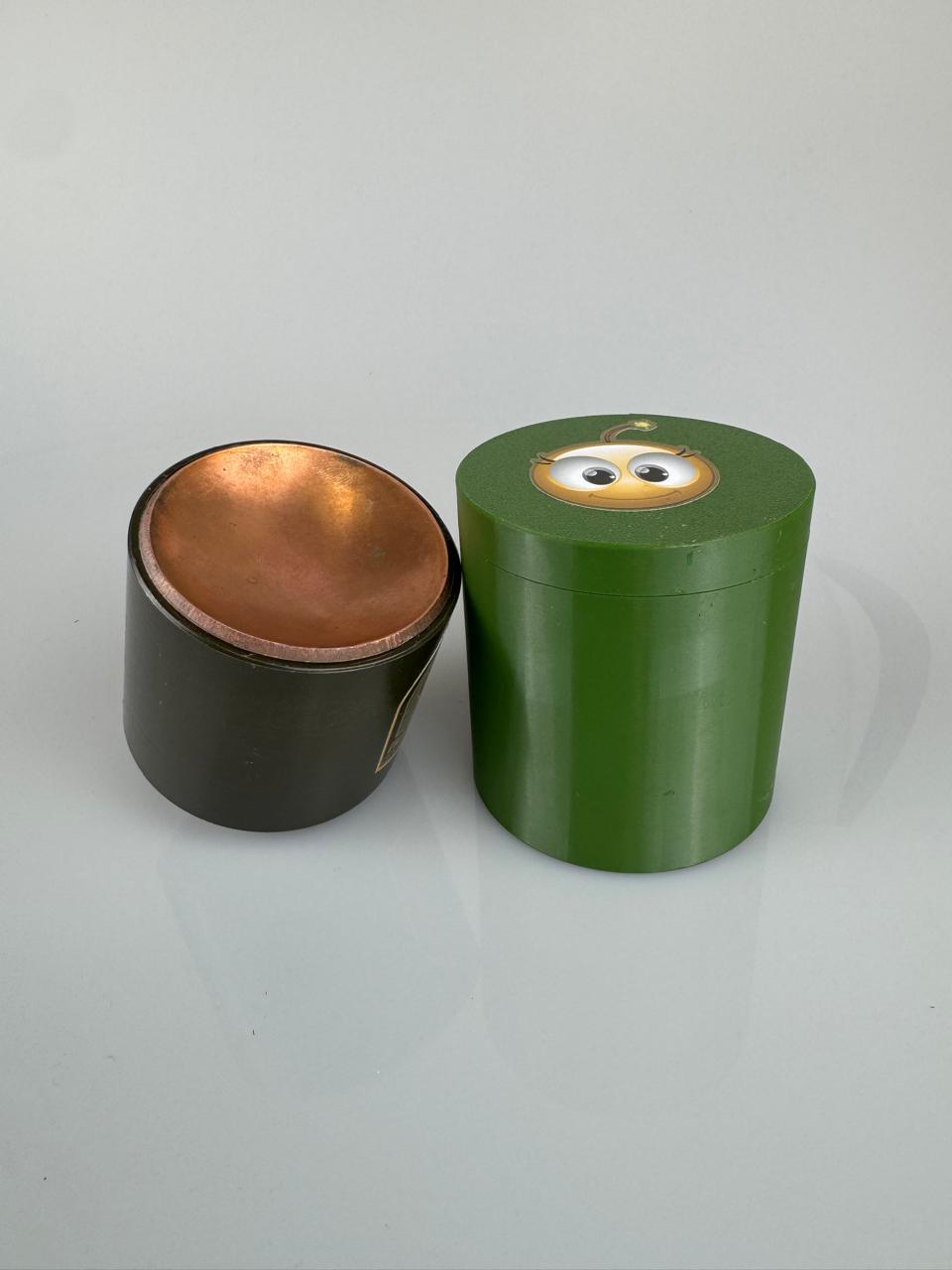
The system is based on the directed explosion effect. Inside the munition there is a metal liner (most commonly copper) shaped as a concave disk.
During detonation of the explosive:
-
The blast wave collapses the metal liner.
-
The metal deforms and forms into a compact, high-velocity projectile — the penetrator.
-
The penetrator accelerates to extremely high speed (several kilometers per second) and travels along the axis of the charge.
-
Due to its high kinetic energy, it is capable of penetrating armor and other solid materials.
Features
-
Unlike a classical shaped-charge jet, the penetrator maintains its form over longer distances.
-
Effective at medium and long stand-off ranges.
-
Commonly used in anti-tank mines, engineering munitions, and specialized systems.
Main Characteristics
-
Liner material: steel
-
Velocity: up to 2–3 km/s
-
High armor penetration due to energy concentration over a small impact area